
| « Citizens United v. FEC: A Decision to Shape Democracy | Eight Years In: An Examination of the Problems in Afghanistan and Potential Solutions to Fix Them » |
Improving Energy Efficiency Through Smart Grid Networks
11/19/09
SILICON VALLEY, CALIFORNIA -- Over 300 executive interests in an industrial energy revolution have gathered here to advance a new enterprise: smart grid technology. Digitally-savvy energy highways, smart grids could one day give peoples worldwide unprecedented control over their use of electricity.
At this seminal industry conference, the consensus is that climate change is an urgent opportunitiy to profit. Key firms and investors are posturing to secure market niches in this projected multi-billion dollar industry, which could be greatly stimulated by emissions legislation and/or government funding. Today's industrial players include IBM, Google, Cisco, Oracle, former U.S. Vice-President Al Gore, investment gurus Vinod Khosla and John Doerr, and other Silicon Valley change agents.
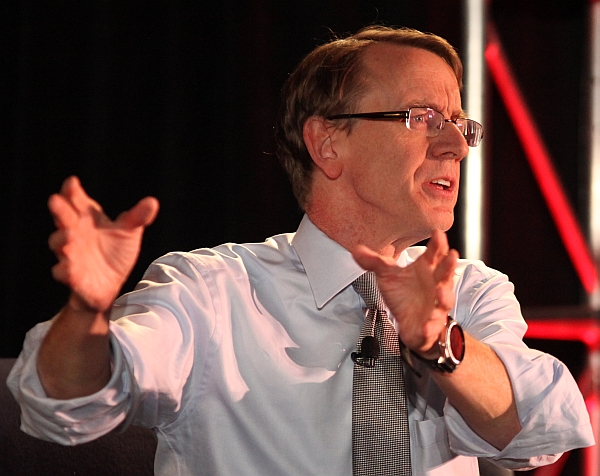
Opening Keynote: John Doerr, Partner of KPCB and advisor to President Obama
Articulating business rewards and obstacles, GreenBeat 2009 commenced with impassioned rhetoric from John Doerr, a visionary multi-billion dollar investor. He focused on the role of private investment for driving innovation in the energy industry. "You can't count on additional government incentives when you invest; you have to create the environment," he advised. Mr. Doerr stressed that Washington was only one arena for advocating sustainable interests. By emphasizing job increases and competitive advantages to be derived from pricing carbon, he helped push Gov. Arnold Schwarzenegger and the California legislature to mandate a 20% cut of carbon emissions in California by 2020. He said that putting a price on carbon will move more investors into low-carbon industrial applications "faster and at a lower cost than any models predict". Mr. Doerr added with a smile, "Congress can't model innovation."
Following John Doerr, a panel considered the energy-management tools that define a smart grid. They focused on real-time pricing of energy, whereby consumers could access their electric bills by the minute, not by the month. With user-friendly software, consumers could demand their electrical appliances to turn on or off according to custom patterns. The panel agreed this information would be a game-changer, empowering end-consumers to seriously impact the energy market through automated conservation. But until smart grid demand reaches critical mass in any given region, one panelist said, unimpressed end-consumers will remain subject to the "utility play" of that region.
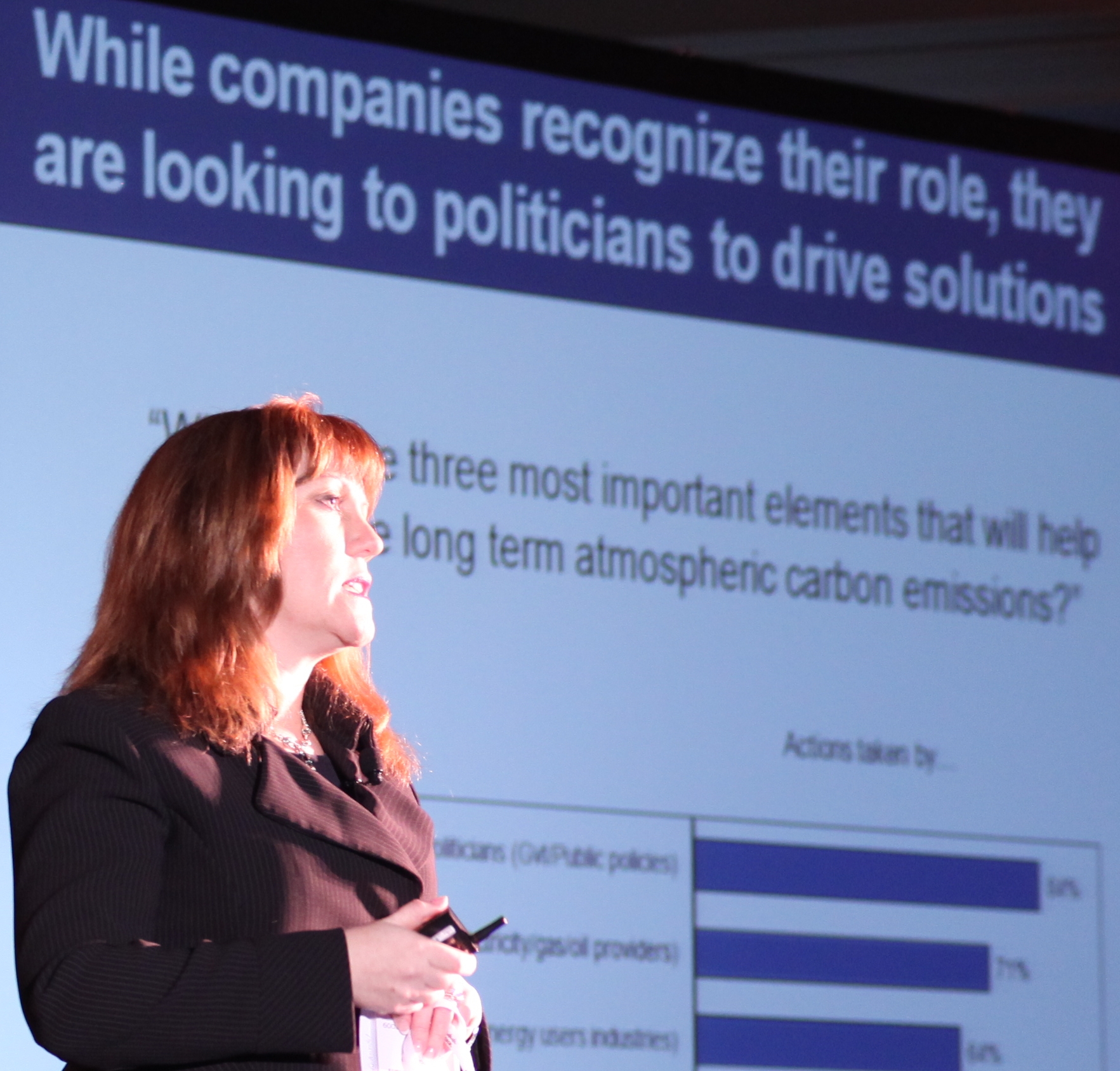
Smart Grid Economics: Sharon Allan, head of the North American Smart Grid Practice at Accenture, explained the statistical circumstances that should compel utilities to revamp the country's ageing electrical grid, and she suggested how they could approach it economically.
Inspired and inspiring, James Rogers, CEO of Duke Energy, described a clear vision for a U.S. economy that is the most energy-efficient in the world: "I believe the true energy efficiency gains will come from the deployment of technology," rather than through changes in consumer behavior. But he added, "The end is not technology; technology is only the enabler." The CEO of the third-largest CO2 emitter in the U.S. pinpointed a new strategy: deploying smart metering technologies to four million customers by 2014, and decarbonizing by 2050.
[Photography by David Lin]
1 comment
From ideas to reality, engineers are the ground source for that process - and especially for a plan like the Smart-Grid, you're going to need a whole lot of smart minds to not only work around the funding, but also program the extensive computer technology needed to sustain the flow of digital information. And that's not even touching upon the electrical hardware "device" that would ostensibly "read" the household appliances.
I don't know if the means to this Smart Grid idea has been figured out yet tech-wise, but keep the public informed on such a compelling and potentially revolutionary idea. Thank you for the wonderful post & pictures!
Comments are closed for this post.
Through researched policy publications and targeted public services, we help equip and motivate lasting improvements in society.
More about us »