
| « Converging Conservation and Development in the Tropics | Improving Energy Efficiency Through Smart Grid Networks » |
Citizens United v. FEC: A Decision to Shape Democracy
01/25/10
This week, the Supreme Court made a highly-controversial decision in the case of Citizens United v. Federal Election Commission, which carries with it momentous political ramifications for the future of American elections. The decision has been receiving substantial attention from across the political spectrum and has found ample media outlet and speculation throughout the week.
Politically diverse interest groups and commentators are already offering critiques, ranging from the sincere to the dramatic in attempt to draw pointed focus on this issue. However, sharp political dissension is already characterizing this issue among Americans, much as it did within the Supreme Court, as evident in its narrow 5-4 final decision and in the majority and dissenting opinions.
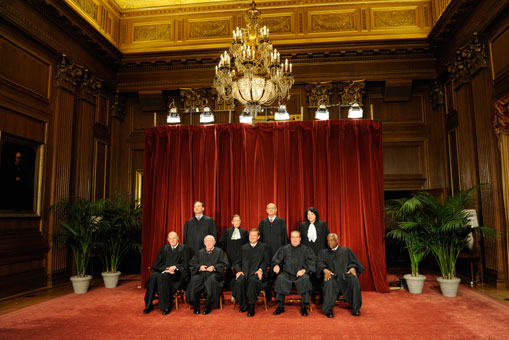
Follow up:
To more fully understand the decision and its political effects it is first important to bring attention to the nature of the dispute, including the parties involved, and the language used in the published decision. The case centered on a conservative advocacy group, Citizens United, and its production, "Hillary: The Movie". Citizens United, along with every other non-profit and for-profit corporate entity, was previously prohibited by the McCain-Feingold Act (or the Bipartisan Campaign Finance Act) to participate in "electioneering communication", which is candidate-specific political advertising presented in an attempt to unduly sway elections, immediately before elections occur. Specifically, through provisions in the McCain-Feingold Act, and in conjunction with previous court decisions (including Austin v. Michigan Chamber of Commerce and McConell v. FEC), corporate entities were prohibited from spending from their private treasuries to buy advertising for or against a particular candidate (30 days before a primary and 60 days before a general election).
These provisions existed to stem the tide of already heavy-handed corporate and interest-group influence in elections and to prevent those entities from commanding time in media with the purpose of steering political debate. Proponents of the McCain-Feingold expenditure/contribution limits saw them as a concerted bi-partisan effort to ensure democratic election and to prevent misguided political discourse (for the benefit of pointed corporate ideology). Opponents, like Citizens United, saw them as a violation of free speech rights, which should be afforded to all citizens (corporate and human alike), and moreover as discriminatory to candidates (predominantly conservatives) who rely on corporate contributions and influence during election cycles.
So, the first task of the Supreme Court was to decide if "Hillary: The Movie" was guilty of "electioneering communication" as it pertained to the McCain-Feingold legislation. In early 2009 they did just that, stating that it could be "susceptible of no other interpretation than to inform the electorate that Senator Clinton is unfit for office, that the United States would be a dangerous place in a President Hillary Clinton world, and that viewers should vote against her". Pointed, conservative propaganda films were not new territory for Citizens United whose other productions include: "ACLU at War With America", "HYPE The Obama Effect", "Rediscovering God in America" (part I and II), "Ronald Reagan: Rendezvous with Destiny". However, "Hillary: The Movie" got special attention, again because of the proximity of its release and advertising for that release to the primary elections, despite the legislative limitations described above.
The argument soon shifted however, from the violation of the McCain-Feingold Act, to the guarantee of Free Speech by the First Amendment to all citizens (again, corporate and human alike). After months of deliberation, five justices ruled that any limitation of corporate or non-corporate money used in "political free speech" was unconstitutional. Particularly, in examining expenditures that corporate or unionized entities make in elections meant to either promote or denounce a specific candidate or their respective platform, and specifically in the immediate lead-up to elections, the majority opinion was that "this Court now concludes that independent expenditures, including those made by corporations, do not give rise to corruption or the appearance of corruption. That speakers may have influence over or access to elected officials does not mean that those officials are corrupt. And the appearance of influence or access will not cause the electorate to lose faith in this democracy. " This decision immediately sent political shockwaves across the United States and saw rise to very divergent opinions, even within the Supreme Court itself.
Dissenting Justice Stevens issued a particularly strong counter-argument, saying, "At bottom, the Court's opinion is thus a rejection of the common sense of the American people, who have recognized a need to prevent corporations from undermining self government since the founding, and who have fought against the distinctive corrupting potential of corporate electioneering since the days of Theodore Roosevelt. It is a strange time to repudiate that common sense. While American democracy is imperfect, few outside the majority of this Court would have thought its flaws included a dearth of corporate money in politics."
Among pundits and commentators, the debate over this ruling quickly became the subject of broadcasts. Conservative talking heads like Rush Limbaugh, decried that "Freedom is awaking from its coma". Newt Gingrich's Heritage Foundation's website quickly published an article titled "Citizens United v. FEC: A Landmark Decision in Favor of Free Speech". In addition, a Fox News op-ed was also posted titled, "Founding Fathers Smiling After Supreme Court Campaign Finance Ruling". All of these commentators, in coordination with their legislative counterparts, including Senators Mitch McConnell (R-KY), John Boehner (R-OH), and Representative John Cornyn (R-TX) sought to affirm emphatic support from the American political right. Senator McConnell had this to say of the decision, "For too long, some in this country have been deprived of full participation in the political process. With today's monumental decision, the Supreme Court took an important step in the direction of restoring the First Amendment rights of these groups by ruling that the Constitution protects their right to express themselves about political candidates and issues up until Election Day."
On the other side, left-wing commentators like Keith Olbermann, who in comparing this decision to the infamous Dred Scott decision, warned that "Thanks to Chief Justice Roberts, this will now change. Unless this near mortal blow is somehow undone, within ten years, every politician in this country will be a prostitute." Likewise, populist rage has been brewing, taking aim at the implications of the decision and those that made it. In one article from Veterans Today, the author loudly calls for the "IMMEDIATE ARREST OF 5 SUPREME COURT JUSTICES FOR TREASON".
This sharp populist condemnation also gave rise to articles across a slew of centrist and left-leaning forums like Daily Kos, ThinkProgress, and RawStory. A new website was even formed to draw specific attention to the decision, aptly called FreeSpeechforPeople.org. It currently features the headline, "What did the Supreme Court just do to our democracy?" and includes a general call to responsive political action. Democratic politicians also have been speaking out, including Rep. Alan Grayson (D-FL) who launched his own website, SaveDemocracy.net, which features a petition meant to be signed in support of six pieces of legislation he is personally introducing in a pointed attempt to counteract the effects of the Supreme Court decision. Of course, most notable of the Democratic responses came from President Obama, where in his weekly address he says bluntly, "This ruling strikes at our democracy itself". He went on to say, "This ruling opens the floodgates for an unlimited amount of special interest money into our democracy. It gives the special interest lobbyists new leverage to spend millions on advertising to persuade elected officials to vote their way - or to punish those who don't."
Various watchdog groups and even corporations themselves are bringing attention to the troubling specifics of this decision as well, and are calling for immediate action to be taken. Both The Sunlight Foundation (a transparency-in-government watchdog organization) and Newsweek, brought focus to the new and largely unanswered question of foreign influence in future campaigns. Contending that as most large businesses are now owned by foreign entities, there is legitimate concern over unregulated foreign influence in American national elections. The Supreme Court, as presented in their decision, seems to see no distinction in domestic over foreign or "multi-national" corporations and maintains a strong air of permissiveness, writing, "Because §441b is not limited to corporations or associations created in foreign countries or funded predominantly by foreign shareholders, it would be overbroad even if the Court were to recognize a compelling governmental interest in limiting foreign influence over the Nation's political process." Throughout the decision, this stance is reaffirmed several times.
In an interesting development which substantiates the proclaimed fears of governmental "prostitution", 41 large corporations and industry leaders, including Delta Airlines, Metlife and others, in coordination with consumer advocacy groups, have called for immediate and strong legislative action to be taken to combat this decision. In open letters to the House and Senate, these business leaders claim that, "many of us individually are on the receiving end of solicitation phone calls from members of Congress," and that "with additional money flowing into the system due to the Court's decision, the fundraising pressure on members of Congress will only increase." These letters are a rare affirmation of the already prevalent issues with American political representation and campaign financing and offer sincere insight into the nature of the problem the Court's decision has caused.
Ideologically speaking, as free speech is being applied to corporate entities, two things have to be considered from a citizen's point of view. The first is the incentive for corporations, as opposed to human citizens, to get involved in the political process. The average citizen has personal economic incentives, personal political incentives, personal value or faith-based incentives and typically a whole range of other motivating factors to participate in elections. Corporate entities have one: profit. This is significant because it's the critical distinction between union involvement and corporate involvement as well. Whereas unions represent a coalition of domestic citizens working towards more tangible, realizable goals for their members (sometimes economic policy, other times rights-based or welfare-focused legislation, etc.), corporations again have one focus: economic advantage. With international trade the way it is today, corporate leaders are far more likely to consider their immediate benefit (often at the cost of the aggregate American benefit) in delineating their political focus.
There is scarcely a time that corporate influence in politics has reflected America's best interest. Corporate contributions from Wall Street flooded the last election, the end result of which is a still dangerous lack of economic regulation. Corporate influence in the EPA has eroded the organization's ability to protect the environment and citizens at even small costs to the businesses producing the damage. Health Insurance corporations have severely derailed almost every meaningful element of the proposed universal health care initiative. The examples are endless, from corporate influence in the USDA, to the strangle-hold of the military-industrial complex; however, be it on a small or large scale, it is evident time and again that corporate influence in politics can only spell disaster and disenfranchisement for the normal citizen.
A second critical point to consider is the ability of corporations, again as opposed to human citizens, to get involved and to what degree. With relatively infinite time and resources, corporate entities can out-think and out-spend almost each and every one of us. The very few Americans who have the time and money to match up with corporate influence are often heads of corporations themselves or are in some way dependent on corporations for their livelihood. A strong example of this is corporate media. Few reporters will have the gall to address eminent issues if it could, in some way, affect their advertising income. FreeSpeechforPeople.org makes this more clear, "In 2008 the Fortune 100 corporations had $600 billion in profits. Now imagine that those top 100 companies decided to spend a modest 1 percent of their profits to intervene in our politics and to get their way. That would mean $6 billion... or double what the Obama campaign spent, the McCain campaign spent, and every candidate for House and Senate [in 2008]."
Overall, it is critical that the decision the Supreme Court has made be understood by every American citizen and addressed in a politically timely and responsible manner by our representatives, for nothing less than the very soul of our democracy. It is ironic that the potential future inability of America's democratic mechanisms rest on an organization that, in stripping the relative rights of average citizens, maintains the tagline "DEDICATED TO RESTORING OUR COUNTRY TO CITIZEN CONTROL" and moreover, that the specific branch of our government meant to stay above political pandering is barreling us headfirst into it. The tools for an informed citizen are out there, and, as Americans now is our time to utilize them.
11 comments
Most congressmen today already serve corporate and special interests so I don't see how the ruling changes anything. From Obama's AIG bailout (stealth GS bailout), GM's bailout (union special interests coveniently ignored), to Bush's wars, no bid Halliburton deals, US steal and farm subsidies, special interests already control both parties.
People's attention would be better served by objecting to the absurd rulings the scotus has had regarding the interstate commerce clause. US framers did not want a central gov micromanaging business bc they knew it would breed corruption. Any meaningful research clearly shows that the intent of the commerce clause was to prevent states from discriminating against each other via unfair commerce regulation (interstate mercantilism), not to allow Congress free rein to regulate anything even indirectly related to commerce. Subsequently, the SCOTUS also ruled that Congress authority over INTRAstate commerce as well.
The plan for liberty's protection was in place, however it has been systematically destroyed over time and forgotten by government textbooks. The people of this nation are simply reaping what they've sowed if you ask me.
"many entities give to campaigns including unions, thinktanks, and non profits but nobody mentions these special interests undermining the welfare of the people."
Again, the significant difference between those entities you mention and corporations is incentive and ability. Those organizations (think tanks, unions, non-profits, etc) produce information and opinions that are tied very intimately to research and the political sentiments of member citizens. Corporate "for-profit" and ideologically-focused institutions solely propagate information related to economic advantage, which puts their expressed political opinion often at odds with the well-being of human, American citizens. Without even mentioning foreign input, the distinction is tangible and prevalent already, the Supreme Court decision just exacerbates the issue.
Beyond that, of course, is ability, which with the amount of cash flow these previously "discriminated entities" possess, means that dominant political discourse will soon only be set by those with the biggest wallets.
"Most congressmen today already serve corporate and special interests so I don't see how the ruling changes anything. From Obama's AIG bailout (stealth GS bailout), GM's bailout (union special interests coveniently ignored), to Bush's wars, no bid Halliburton deals, US steal and farm subsidies, special interests already control both parties."
Again, a reading of the article you refute would absolve the question here. Essentially, the ruling changes the time period and amount of influence these corporations can have. This statement also demonstrates the inherent contradiction in your argument: if you believe that corruption is already a serious issue, than it stands to reason that enhancing the abilities of those at the source of the problem will only further contribute to their perpetuation and reach.
"The plan for liberty's protection was in place, however it has been systematically destroyed over time and forgotten by government textbooks. The people of this nation are simply reaping what they've sowed if you ask me."
This again underlines your serious misjudgment of the issue in reference and your misunderstanding of even your own argument. "Liberty's protection", in this situation, was largely the McCain-Feingold Act and the 100+ years of aggregated statutes that helped facilitate honest elections. The people of this nation can't possibly be "reaping what they've sowed", because the Supreme Court is not elected, not directly impeachable, and not subjected to anything even approaching democratic tenure. This was a judgment that reflects constitutional weakness and lack of consideration of the comprehensive interest of the "people of this nation" by an increasingly out-of-touch Supreme Court.
However, your article fails to make a sound constitutional argument. Corporations are no less composed of people than another other organization, including unions, nonprofits, etc. Constitutionally, there is no distinction between the two.
You say they are different because of "incentive and ability". But being different in no way makes one less entitled to free speech than the other. That's an illogical constitutional argument.
Moreover, if you think unions and other special interests group have no financial motive you're either naive or biased. I would lean towards the latter since the GM bailout is in recent memory. Union financial incentives are responsible for the largest zombie corporations in America that are not called banks (this also shows your ability false as well since facts suggest otherwise).
Nonprofits absolutely pander for government grant money, as well as policy that favors their specials interests outside of said nonprofits. I guarantee you the tarriffs we have on Chinese tires or subsides for US steal are not for "aggregate American benefit". Currently, every american pays a higher price to subsidize these union interests. Public school institutions are also political. Its no wonder they support federal loan guarantees for college. That's the reason college is unaffordable. Colleges would actually have to control their own costs to compete if this interference was not there. Rest assured this is a kickback o university administration and faculty and not students. Should these organizations be barred from contributing to campaigns? Maybe you would like to see that happen, but it IS unconstitutional and your argument does not successfully make a case against this.
My point is clear. Special interests control our country. You wrote this:
"McCain-Feingold Act and the 100+ years of aggregated statutes that helped facilitate honest elections"
This is ignorant. We just had the largest corporate bailout in our nations history before this law was struck down. Not to mention the GM bailout and countless other examples of special interests kickbacks. Was there a limit to specials interest control before this decision? No, and it makes no difference. 100 percent is 100 percent.
You fail to see the real protection provided in the Constitution and that is the 10th amendment. I don't expect anyone writing for the "Roosevelt Institute" to know the original intent behind the commerce clause, so I was merely suggest you research it. Its actually ironic since FDR and teddy both made cartels for big business could use monopoly pricing. The fact is our federal gov does not have the constitutional right to interfere in business. The purpose of not giving them this power was to prevent the current level of corruption. Why would corporations donate to politicians that can't help their cause?
Yes, Americans are reaping what they've sowed, despite the fact that they've been constantly tricked by both the progressive movement and the conservative right. The solution to this is state nullification of unconstitutional powers, but people are so ignorant of nullification it is not even an issue anymore. I think I'll repeat some of what i wrote another time free speech was violated and DC was overstepping their authority.
" that in cases of an abuse of the delegated powers, the members of the general government, being chosen by the people, a change by the people would be the constitutional remedy; but, where powers are assumed which have not been delegated, a nullification of the act is the rightful remedy: that every State has a natural right in cases not within the compact, (casus non fœderis) to nullify of their own authority all assumptions of power by others within their limits"
Think-thanks, of course, are ideologically-focused. They use an ideological foundation when debating public policy and making policy recommendations. This is why think-thanks are often classified as conservative or liberal. There are other think-thanks that focus on specific issues, but these too have to be ideologically-focused to consistently recommend the policies which think-thanks were founded to recommend.
Unions are also ideologically-focused, with their ideology being the rights of the worker. That is their reason for being. Additionally, unions often collect money from their members through dues and other fees, which would classify them as "for-profit".
Additionally, major unions, such as Service Employees International Union, already wield considerable power in Washington, more so than many corporations. This union donated many millions of dollars to President Obama's campaign (if they can afford to spend so much money on a campaign, you cannot tell me this union does not profit somehow from its members). It comes as no surprise that one of the goals of Congress and President Obama last year was the passage of the Employee Free Choice Act, which would make it much easier to form unions in a workplace, and as a result make it easier for major unions such as SEIU to grow even larger, and wield even more power in Washington. It's also often reported during elections that unions are often the main force behind "get out the vote" initiatives, giving them considerable power over elections.
What the Supreme Court has done here is simply removed restrictions applied to corporations that did not apply to unions and other organizations which have just as much interest in the political process as corporations. I have to agree with Thomas Jefferson that the best option would be to have as little special interest influence in Washington as possible. The best situation would be where Congressmen actually take calls from their constituents and act on what's best for their voters, instead of what's more profitable for their own self-interests. This Supreme Court decision does nothing to change that. It simply maintains the status quo in Washington. It is not as momentous as it is made out to be.
Mr. Jefferson,
I believe we can agree on the unprecedented amount of corporate influence in politics and its unfavorable effects. However, there are several things you have assumed that are inherently wrong.
First, I was not striving to make a "constitutional argument" as much as a moral one. Undue corporate influence is one area that I believe our constitution lacks severely in, which, I assume is because either the founders could not have fathomed the monumental strength of international corporations in the 21st century, or because they authored our founding documents in a manner that severely favored the wealthy and their preponderant right to influence(re: Federalist no.10 and 71).
Second, you said, "But being different in no way makes one less entitled to free speech than the other. That's an illogical constitutional argument." I find fault with this on two points. One, corporations are not, in my opinion and that of many others, deserving of human citizen rights. They simply are not human beings, nor do they have any inherent qualities that dispose them towards human behavior, and consequently they should not be afforded the same privileges that others (HUMANS) have. In addition, to again make reference to the constitution is a fallacy. Corporations are not mentioned one time in any constitutional document, just as they make no reference to God, which, as many a legal scholar has pointed out, was a clear attempt to shed the influence of those entities in the political system (don't forget the titans of the times like the British East India Company which fraught all sorts of economic and political havoc on early Americans).
Finally, Mr. Jefferson, I think you should be mindful that disrespect will not be tolerated in this thread or any on this website. Statements like, "I don't expect anyone writing for the "Roosevelt Institute" to know the original intent behind the commerce clause, so I was merely suggest you research it," will from now on lead to a removal of your comments. Discourse is always encouraged until it bridges onto purposeful impertinence.
Bob,
I think you failed to understand the point of my argument.
To begin, you made a critical mistake in pegging unions as "for-profit" agencies. Trade unions are by definition, non-profit organizations. You are right in assuming they exert influence on the American electoral process, although, by almost every measure, in a heavily declining way. Coupled with the decline of the American worker, by measures of his wage earnings, his employment opportunities, and the constricted nature of every one of his political actions has produced an already incredibly lop-sided presence in American politics that favors the wealthy and corporate elite. The money these workers spend, and by extension the unions they have elected to represent them, is from voluntary dues from members who expect that entity to produce political gains, in their favor.
The critical distinction here is that corporations collect money in increasingly monopolistic fashions, by unwitting contributors, to exact influence in a way that works almost 100% of the time, against American interests.
To sum it up, union members willingly pay their dues so that (often democratically) appointed leaders can act in a manner that benefits the American workers whom participate, in an effort to balance out the all-too-often authoritarian and exploitative practices maintained by corporations. While, on the other hand, corporations collect money from a much more vast collection plate (the international and American consumer industry) to influence politics in a way that benefits almost exclusively the members of its board and its primary stockholders.
Finally, I would like to add two things. First, before you approach a legitimate research-based article to put together a reply, you should consider if it is really prudent to use talking points from Rush Limbaugh (SEIU was brought up in the exact same context as you presented, on Mr. Limbaugh's Jan. 22nd broadcast- I checked the transcript). Legitimate research and thoughtful, self-reflective replies always leads to a better understanding of the subject matter at hand, which brings me to my next point: this case IS momentous, and if people don't act now the political ramifications will harm this country for generations to come. It is true, as the BBC recently pointed out, that Americans classically vote against their self-interest. However, as a point of academic pride, I have always striven to get full understanding of a subject before commenting on it and I would suggest that you do the same in the future. I find it incredibly hard to justify a very obvious argument to anyone who does not conduct research on subjects outside of the incredibly biased and narrow-minded insight they gleam from talk radio.
That is why I want to make clear that we welcome dissent, especially that prepared by Thomas Jefferson and Bob.
Regarding Mr. Jefferson's comment: "I don't expect anyone writing for the 'Roosevelt Institute' to know the original intent behind the commerce clause, so I was merely suggest you research it." I do not interpret this as an attack on our institution, but rather as a veiled allusion to the political legacies of former Presidents Theodore and Franklin Roosevelt.
Beyond that, I look forward to and encourage all retorts and I am happy to embrace this, and all future, debate!
"Bureaucracy happens. If bureaucracy happens, power rises. Power corrupts."
Why else would the Supreme Court give away the power of human rights to the megalith of international corporations?
Ross, you mentioned you think the US constitution is deficient when it comes to corporate interest. This is because the commerce clause in our constitution has been used in a way that was unintended by the authors. The Federal government should not have control of businesses, and when you remove this power the issue of campaign contributions becomes mute b/c it removes the incentives of special interests. Of course if you cannot count on the SCOTUS to enforce the constitution then the option of nullification should come up.
I do think my Constitution argument is valid, as we are talking about a SCOTUS ruling. Campaign finance is a clear 10th amendment violation. This is a criticism of the ruling, correct? I did not read any suggestion of a Constitutional amendment so I thought the author would have liked the court to rule differently.
I won't address your bias against for profit entities. I think its pretty clear to all readers that you favor some special interests if they favor your ideological view or else you would have suggested removing free speech from other special interests that you're in favor of.
I do encourage everyone to research the commerce clause and I do not mean that to be patronizing in any way. The reinterpretation over time has drastically affected our country for the worse. I am sure everyone that has taken the time to read an article about corporate influence would be interested in this subject. I would highly recommend a book by Thomas DiLorenzo called "Hamilton's Curse" for people that are interested in the merchantilist interests that have affected the US. Here's a lecture on American merchantilism from the author if anyone is interested. I don't think he talks about the commerce clause like he does in the book but he does give a history of American merchantilism, which is exactly what we're talking about when we discuss corporate welfare, protectionist tariffs, etc., even if it has not been explicitly stated.
http://www.youtube.com/watch?v=wu9SI0ZwtbM&feature=related
Secondly, union membership is often INVOLUNTARY (see the concept of the "union shop" where if you don't join the union -- UAW for example-- you can't work at a certain job). Involuntary union membership = involuntary union dues.
And as for the comment that "the BBC recently pointed out, that Americans classically vote against their self-interest", who in the BBC has the right to tell us what our "self-interest" is? The fact is that the American Revolution was fought because we didn't want England telling us what to day or think or do. Their words carry no authority on "this side of the pond"...
Frankly, I cheered when news of this decision came down the pike. It was McCain-Feingold that provided me with more than enough reason NOT to vote for McCain for President in 2008 (that and Sarah Palin as his running mate). Heck, I'm willing to fight for the concept of "one corporation-- one vote".... May we see it in my lifetime.
I thoroughly enjoyed reading this article and the debates that followed. I am a graduate student at Shorter College and I must say that now I will be READY for tonight's discussion in my Business Law class about the Citizens United v. FEC case! I admire everyone's knowledge and passion on the subject. I find it simply fascinating. Thanks again!
Comments are closed for this post.
Through researched policy publications and targeted public services, we help equip and motivate lasting improvements in society.
More about us »