
| « C.I.A. Crisis Simulation Highlights Challenges to Intelligence Analysis | Citizens United v. FEC: A Decision to Shape Democracy » |
Converging Conservation and Development in the Tropics
01/30/10
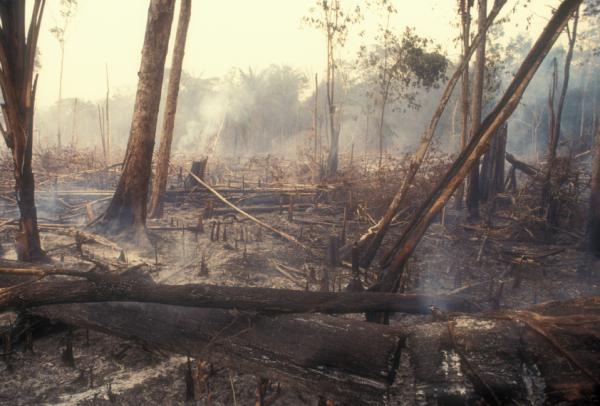
The Global Land Crisis: Deforestation in the Brazilian Amazon
GAINESVILLE, FLORIDA — The University of Florida Tropical Conservation and Development Program hosted a three-day conference to address the current hurdles of land conservation in the developing Latin American and African tropics. The conference generated a diverse discourse within a broad international spectrum of scholars and practitioners, scientists and advocates, students and instructors. It focused on the “global land crisis”, as Daniel Nepstad from Woods Hole Research Center described it. Speakers from a wide array of universities, institutions, and non-governmental organizations considered tropical deforestation from all angles. They covered topics ranging from food security to emerging infectious disease, and proposed several responses from market-based incentives to international collaboration. The conference underscored the steep challenges inherent in confronting the destructive regimes of modern landscape transformation.
Follow up:
A common thread that surfaced in discussions was the necessity to engage the local and indigenous communities of the tropical landscapes, particularly, to integrate them into a greater culture of environmental consciousness. Despite the diversity of approaches proposed for land conservation, it appeared that they all shared the need to enhance global environmental awareness at the local level. Considering that land conservation is a dilemma of many layers—political, ecological, socioeconomic—and hosts multiple stakeholders of several regions and timescales, environmental education is indeed a critical component of the solution. A clear example is global climate change. 31% of global greenhouse emissions are caused by land transformation in the Brazilian tropics. While the international political arena is well versed in the jargon of climate science, the language of the carbon market and CO2 seldom reach the local peoples—whose daily decisions comprise a significant part of conservation solutions. Conservation stands no chance if there is no effort to encourage a greater consciousness of environmental impact through education and training, and understanding of how precisely local choices may be altering the global environment, and ultimately, the global human community.
1 comment
The importance of citizen awareness was also emphasized during the discussion about market-based approaches. "We are creating ethical products through citizen education," said one sustainable development consultant. By "ethical products", he is referring to the cost of negative externalities on what we buy—like ethically produced fair-trade coffee vs. economically produced free-trade coffee; and "creating" these products (e.g. pricing carbon emissions) requires people to be informed and inspired enough to pay for change. This cost makes ethical products all the more difficult to create.
Sarah, I look forward to your work from Brazil!
Comments are closed for this post.
Through researched policy publications and targeted public services, we help equip and motivate lasting improvements in society.
More about us »