
| « Insights and Tools for Smart Governments | Net Neutrality Restricts Smart Grid Deployment » |
Nuclear Power Safety Then and Now
04/07/11
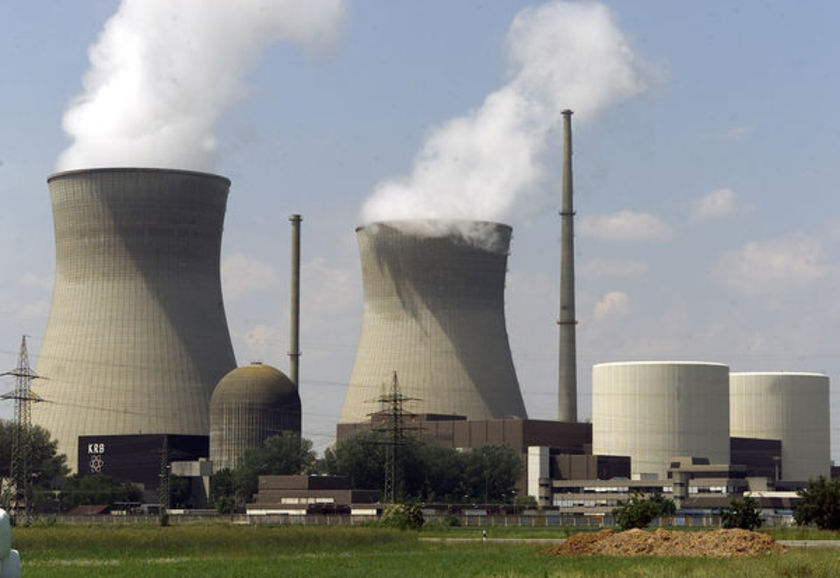
Nuclear power plants have the potential to quench much of our thirst for energy, but as we have seen in instances such as Three Mile Island, Chernobyl, and most recently, Japan, they have the deadly potential to harm people and the environment if things to wrong. How do we balance between safety and energy demand?
The very first safety design for nuclear power was Enrico Fermi’s “man with an ax.” In this mechanism, a man with an ax would cut a rope and drop liquid cadmium into the nuclear process to shut it down. This idea evolved into more automated coolant methods.
In the 1950s, Admiral Hyman Rickover designed the first nuclear powered submarine. This design used a light water reactor, where water is used as both a coolant and a moderator of the nuclear process. This design set the precedence for future nuclear reactors, regardless of its effectiveness and safety.
Unfortunately, these light water reactors that are commonly used today require a lot of active intervention, with a network of pressurized pipes and valves that greatly complicate the nuclear process. It essentially solves one problem and creates a medium for others to occur. Although this seems ironic and fallible, it has been very successful in the past, with a very limited number of failures.
Recent nuclear disasters have been a catalyst for improvement and rethinking of safety designs. Today’s plants that are being built are focusing on passive safety, or systems that will automatically deploy without external commands or controling. For example, we can build bigger walls or move the plant to safer areas. Passive safety systems are essentially Homer Simpson-proof. Whether the problem is caused by human error or nature, it should be able to handle itself, regardless of who is operating the system. A recent example of this is encasing Uranium fuel in thousands of small, tennis-ball sized “pebbles” filled with graphite-coated seeds that can keep the system cool even if power is lost for days.
Furthermore, many other passive safety technologies are waiting in line for the Nuclear Regulatory Commission to approve. Westinghouse’s new design is basically a cooling system that uses only gravity to continuously introduce water into a reactor to cool it. When the coolant system fails, valves open, water pours into the pile, turns into steam, rises, condenses, and falls back onto the pile. This design has already been approved and is currently being implemented in new reactors.
For a period of over twenty years in the late 20th century, there had been no major disaster in commercial nuclear power, and safety technology has certainly improved over this period of time. However, opponents of nuclear power simply believe that it is merely impossible to make a perfectly safe system, no matter how many redundant safety mechanisms are employed. Despite all the trust scientists and engineers have in their designs, Japan has shown us that things can still go wrong.
Logically, it seems like a bad idea to place nuclear reactors on an earthquake-prone island. However, Japan’s plants are equipped to detect seismic activity and shut down accordingly. This has happened numerous times in the past. The problem in the Fukushima incident was that the diesel engines meant to run the coolant system shut off prematurely in one plant due to the tsunami. In another plant, a turbine generator caught fire and created a lot of excess heat.
So with this recent disaster, the future of nuclear power is at stake. It appears that, despite critics and opponents, nuclear power will survive with the increase in problem awareness and the invention of newer, safer technologies. Until another great alternative is designed and proven successful, our demand for energy and the limited nature of fossil fuels will probably keep nuclear alive.
Feedback awaiting moderation
This post has 29 feedbacks awaiting moderation...
Comments are closed for this post.
Through researched policy publications and targeted public services, we help equip and motivate lasting improvements in society.
More about us »