
03/25/10
Following the 1967 Arab-Israeli War, Israel has had control over of several territories (specifically the West Bank, East Jerusalem and the Gaza Strip) which contain predominantly Arab-Palestinian populations. Israel has kept control of these areas often through the use of violent and disproportionately reactionary, military means and has increased Jewish settlements within them (particularly in East Jerusalem) over time, in an attempt to create a Greater Israel (an Israeli state that permanently includes the West Bank and Gaza Strip) with Jerusalem as its internationally-recognized capitol.
Continuing on that path, current Israeli Prime Minister Benjamin Netanyahu's government coalition announced recently, on the very day that American Vice President Joe Biden was visiting Israel earlier this March, that 1600 new homes will go up for Jewish settlers in East Jerusalem - again, a largely Palestinian-inhabited territory. Outrage flared as new Jewish settlements into East Jerusalem have already displaced Palestinian families and lead to the abrupt bulldozing of homes and property. Netanyahu's announcement comes right after Palestinian leaders agreed to indirect peace talks, after a 14-month hiatus, and will surely derail any chances of negotiation.
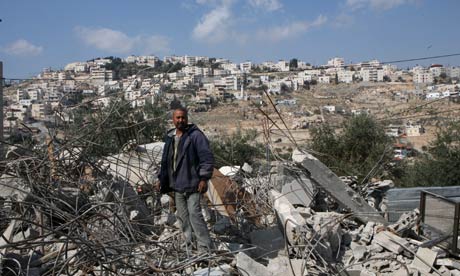
40-year-old Palestinian Mahmoud al-Abbasi stands amid the rubble of his home after it was demolished by the Jerusalem municipality in the East Jerusalem neighborhood of Silwan. Image courtesy of The Guardian UK/Gali Tibbon
01/30/10
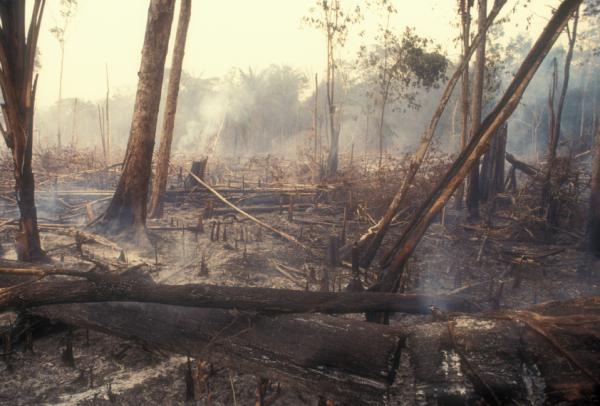
The Global Land Crisis: Deforestation in the Brazilian Amazon
GAINESVILLE, FLORIDA — The University of Florida Tropical Conservation and Development Program hosted a three-day conference to address the current hurdles of land conservation in the developing Latin American and African tropics. The conference generated a diverse discourse within a broad international spectrum of scholars and practitioners, scientists and advocates, students and instructors. It focused on the “global land crisis”, as Daniel Nepstad from Woods Hole Research Center described it. Speakers from a wide array of universities, institutions, and non-governmental organizations considered tropical deforestation from all angles. They covered topics ranging from food security to emerging infectious disease, and proposed several responses from market-based incentives to international collaboration. The conference underscored the steep challenges inherent in confronting the destructive regimes of modern landscape transformation.
01/25/10
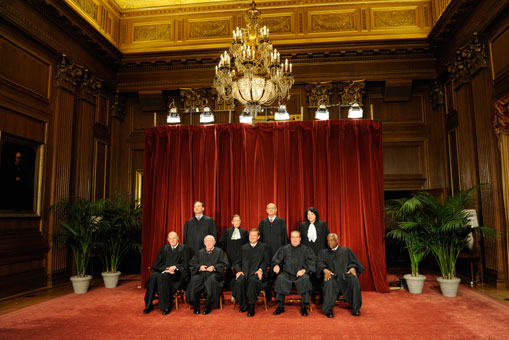
This week, the Supreme Court made a highly-controversial decision in the case of Citizens United v. Federal Election Commission, which carries with it momentous political ramifications for the future of American elections. The decision has been receiving substantial attention from across the political spectrum and has found ample media outlet and speculation throughout the week.
Politically diverse interest groups and commentators are already offering critiques, ranging from the sincere to the dramatic in attempt to draw pointed focus on this issue. However, sharp political dissension is already characterizing this issue among Americans, much as it did within the Supreme Court, as evident in its narrow 5-4 final decision and in the majority and dissenting opinions.
01/15/10
The Dynamo has been formally welcomed into the Roosevelt Institute Campus Network. As a University of Florida chapter, we join a far-reaching network of over 7,000 students in 80 policy organizations across the United States. We are honored to become a part of this close family and excited about the many opportunities to come.
11/19/09
SAN MATEO, CALIFORNIA -- Over 300 distinguished executive interests in an industrial energy revolution have gathered here to advance a new enterprise: smart grid technology. Digitally-savvy energy highways, smart grids give people unprecedented control over their use of electricity. How could this technology be capitalized upon?
The consensus here is that climate change creates urgent opportunities to profit. Major firms, investors, and politicians are dynamically posturing to win big in the $6 trillion dollar U.S. energy industry, which faces great changes from emissions legislation. This includes IBM, Google, Cisco, Oracle, former U.S. Vice-President Al Gore, major investment gurus Vinod Khosla and John Doerr, and a wealth of other innovative Silicon Valley entrepreneurs.
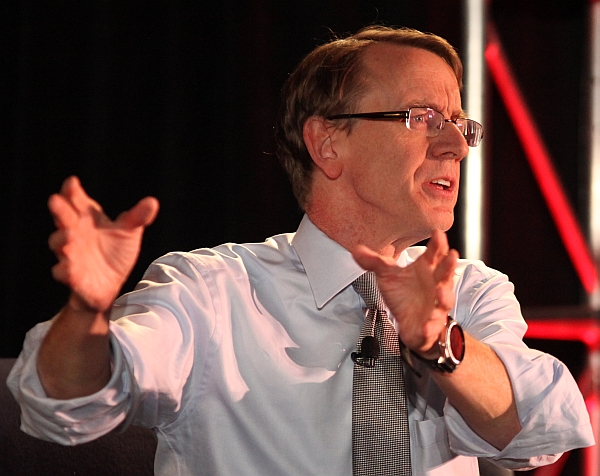
Opening Keynote: John Doerr, Partner of KPCB and advisor to President Obama
Articulating business rewards and obstacles, GreenBeat 2009 commenced with impassioned rhetoric from John Doerr, a visionary multi-billion dollar investor. He focused on the role of private investment for driving innovation in the energy industry. "You can't count on additional government incentives when you invest; you have to create the environment," he advised the ambitious audience of entrepreneurs.
Mr. Doerr stressed that Washington was only one arena for advocating sustainable interests. By emphasizing job increases and competitive advantages to be derived from pricing carbon, he helped push Gov. Arnold Schwarzenegger and the California legislature to mandate a 20% cut of carbon emissions in California by 2020. He said that putting a price on carbon will move more investors into low-carbon industrial applications "faster and at a lower cost than any models predict". Mr. Doerr added with a smile, "Congress can't model innovation."
11/12/09
One of the premier foreign policy issues that faces the United States today is the conflict in Afghanistan. Months after inheriting this eight year old war, President Barack Obama has yet to determine a strategy that either supplements or diverges from the directives of the previous administration, despite the evolving and deteriorating nature of the conflict.
Several points have made the formation and implementation of policy to this situation slow to develop. Among these are the troubles with the recent Afghan presidential elections, the resurgent violence of the Taliban and Al-Qaeda movements in different regions of Afghanistan, the consequent gap of opinion between the American public and American political and military advisors on how to stymie that resurgence, the re-examined national security value of the conflict to the United States (in light of emerging quandaries with Pakistan and Iran), and the desire of the Obama administration to distance itself from the image of hasty decision-making processes characteristic of Mr. Bush and his staff. Understanding these problems is the first step in articulating the most correct route to pursue in regard to Afghanistan.
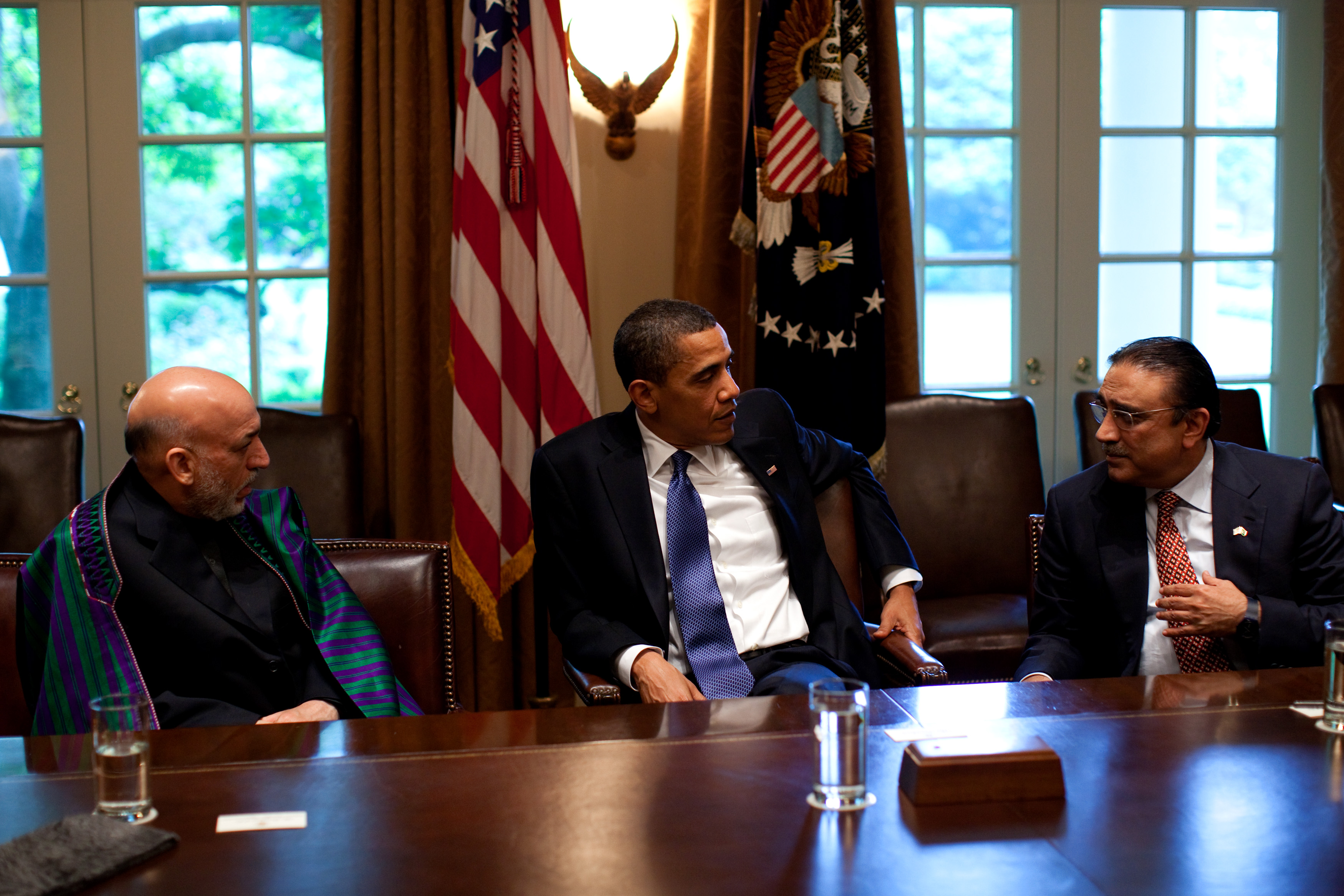
Trilateral Meeting: (left to right) Presidents Hamid Karzai of Afghanistan, Barack Obama of the U.S., and Asif Ali Zardari of Pakistan confer on policy
The first issue mentioned above is certainly the most visible: the fraud-spattered elections in August 2009. The two major opponents in this election were incumbent-President Hamid Karzai and Dr. Abdullah Abdullah. The results, which produced a decisive victory for Karzai , were immediately disputed. After UN intervention, cautious US condemnation, and the promise of a run-off, Abdullah rescinded his election bid (with ominous rhetoric) on November 1, 2009, less than one week before the scheduled run-off election. This issue underscored two very serious problems with the legitimacy of the Afghan government: the first one, being causal, is the deep-seated corruption on various levels of the Afghani political structure; the second, being partially reactionary, is the budding distrust of the government by the Afghan public, a condition which invites a whole domain of other problems.
11/05/09
"Local experts discuss climate change, clean energy" (The Alligator)
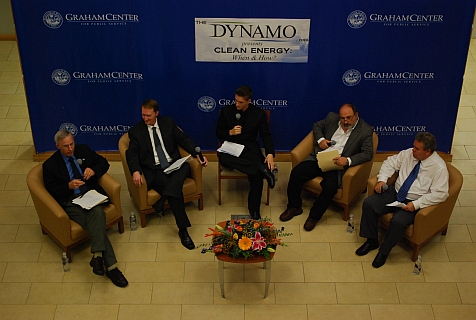
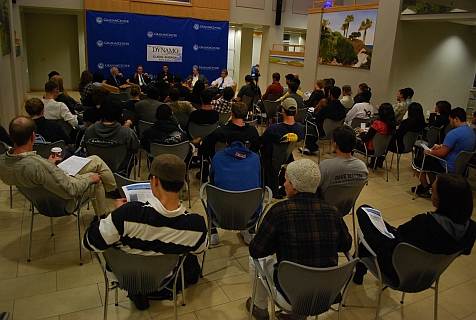
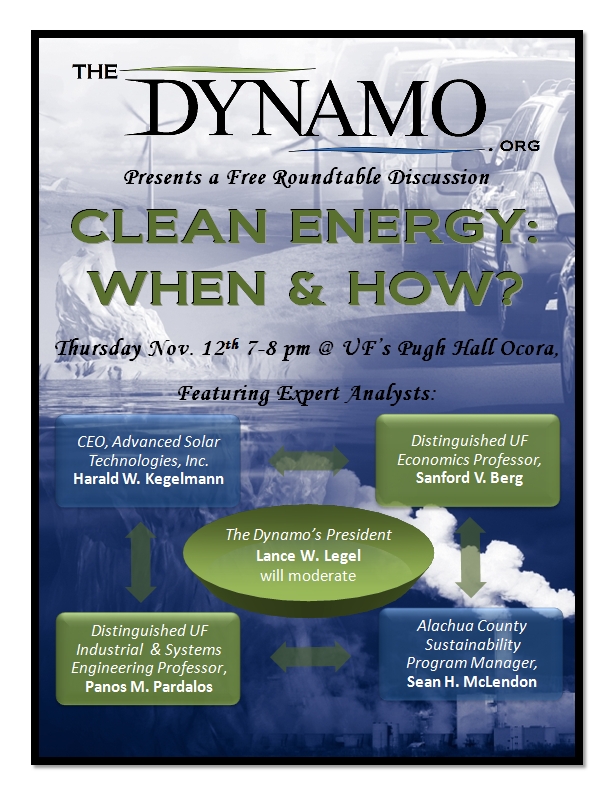
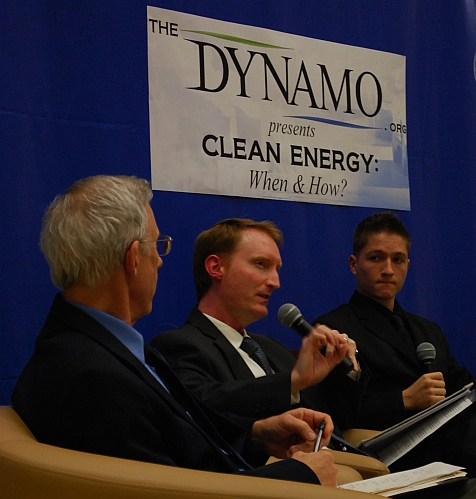
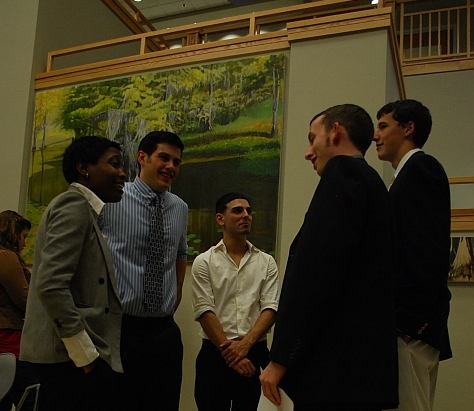
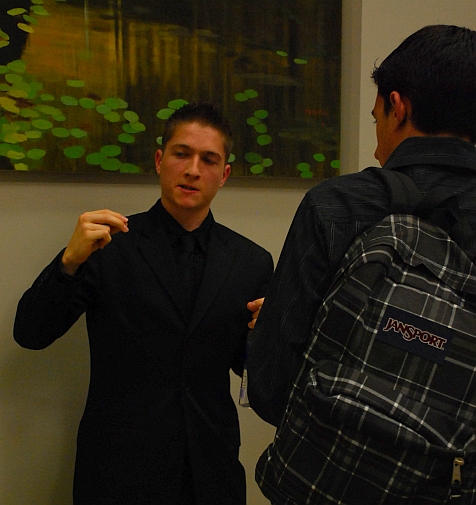
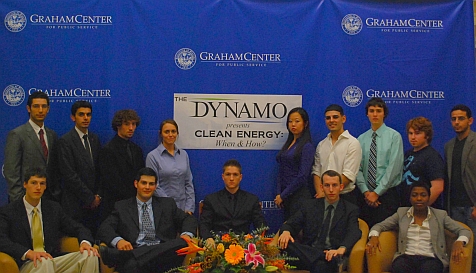
"Local experts discuss climate change, clean energy" (The Alligator)
10/28/09
I learned through a TED talk about the Ansari X-Prize, a $10 million prize awarded five years ago. To win the prize, teams had to create a vehicle capable of sending three passengers to a height of 100 km, twice within a two week period. Twenty-six teams from seven nations entered, and collectively spent over $100 million. The winning entry, SpaceShipOne, was put in the Smithsonian National Air and Space Museum. The prize sparked the beginning of the private spaceflight industry, and since it was awarded in 2004, over $1 billion has been spent on private spaceflight.
Although the $10 million was difficult to raise, it pales in comparison to NASA's budget, which is well in excess of $17 billion, and may exceed $18 billion in the next few years.
Public vs. Private: (left) NASA's Endeavour launches; (right) SpaceShipOne in flight

Images courtesy of NASA and Scaled Composites, LLC
Personally, I have never been a fan of complete government control over the space industry, but I understand why many people are. From a military standpoint, having corporations in control of space rather than the government is risky and could be disastrous. From a legal standpoint, having corporations stake out parts of space (or equity on the moon, as the TED speaker jokes about) is unprecedented and messy. Privatization of space would cause a lot of work for a lot of bureaucrats, and a plethora of new legal issues.
But I am still forced to wonder, if so much was accomplished with only $10 million, what could be done with just one tenth of NASA's budget?
:: Next >>